17 Nov
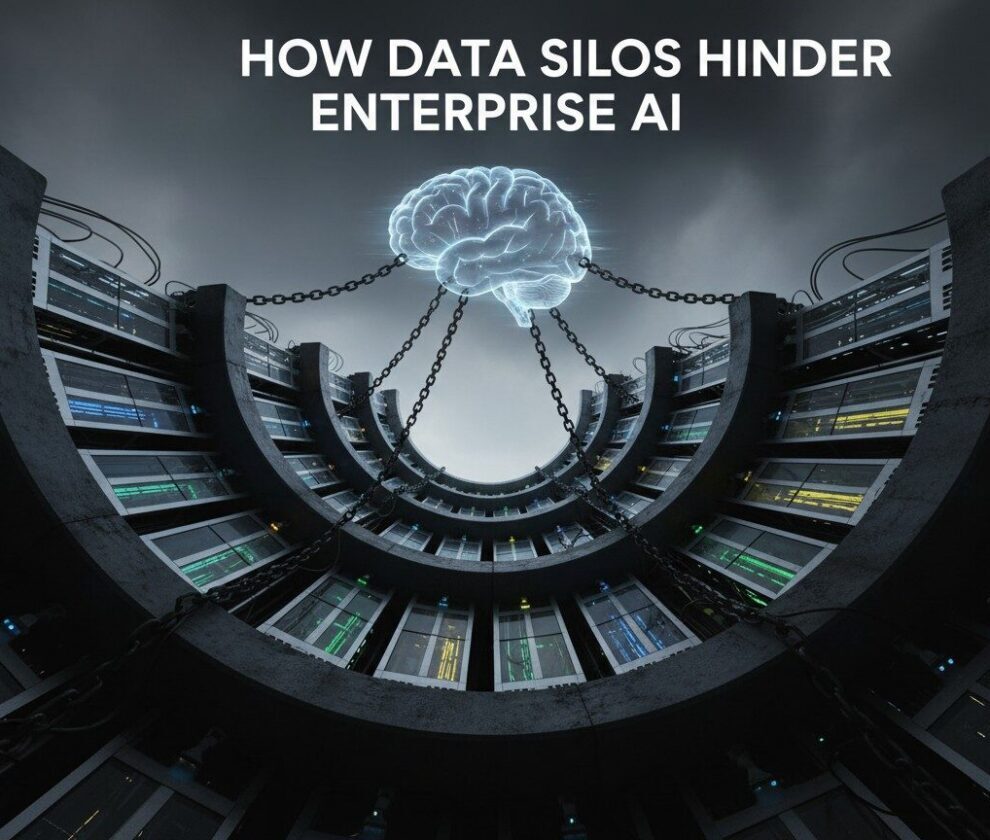
In today’s rapidly evolving digital landscape, businesses face a critical obstacle: data silos. These isolated pockets of information act as a significant barrier to adopting artificial intelligence (AI) at scale. According to IBM, the problem isn’t the AI technology itself; rather, it’s the scattered and disconnected nature of organizational data. In this article, we’ll explore what data silos are, their impact on AI, and the solutions that can drive innovation and efficiency.
What Exactly Are Data Silos?
Data silos refer to isolated collections of data that are confined within individual departments or teams in an organization. For instance, finance data may remain inaccessible to the HR department, limiting cross-functional analysis and decision-making.
IBM has aptly termed these silos the ‘Achilles’ heel’ of modern data strategies. They hinder an organization’s ability to fully harness AI’s capabilities. A recent study by the IBM Institute for Business Value highlights that while AI is ready for deployment, the available data often isn’t.
The Impact of Data Silos on AI Implementation
Data silos create significant challenges for AI initiatives:
- Delayed Timelines: Teams spend excessive time cleaning and preparing data instead of leveraging it for insights. Ed Lovely, VP and Chief Data Officer at IBM, notes that these delays can stretch AI projects into months due to the complexities of data alignment.
- Stifled Innovation: When data is not freely accessible across an organization, critical insights are missed, negatively impacting innovation and leading to a potential loss in competitive edge.
This underscores a crucial question for IT leaders: How can they break down these silos to enable the efficient deployment of advanced AI systems?
From Data Cleaning to Driving Value
An overwhelming 92% of Chief Data Officers (CDOs) surveyed by IBM emphasize focusing on business outcomes. Yet only 29% feel they have clear frameworks to measure data value effectively.
Real-World Success Stories
- At Medtronic, a leading medical technology firm, workflow automation reduced invoice processing time from 20 minutes to just 8 seconds, with an accuracy rate of over 99%.
- Similarly, Matrix Renewables, a renewable energy company, centralized its data platform to cut reporting time by 75%.
These examples demonstrate the transformative potential of modern data management focused on business outcomes.
Embracing Modern Architectures: Data Mesh and Data Fabric
Addressing the challenges posed by data silos requires adopting modern data architectures such as data mesh and data fabric. These frameworks allow data access directly where it resides, eliminating the need to move all information into a centralized data lake.
“Enterprise AI at scale is within reach, but success depends on organizations powering it with the right data.” – Ed Lovely
IBM also champions ‘data products’—ready-to-use data sets designed for specific business objectives, such as a comprehensive 360° customer view or financial forecasts.
Remaining Challenges: Governance and Talent Gaps
Despite these advancements, challenges persist. Many CDOs identify data sovereignty as a top priority for their risk management strategies. Additionally, the talent shortage poses another significant hurdle. By 2025, 77% of organizations are projected to face difficulties in attracting talent with critical data skills.
Building a Data-Driven Culture
Overcoming cultural and organizational barriers is essential for success. This involves:
- Improving Data Literacy: Employees need to understand the value of data and have access to user-friendly tools for leveraging it.
- Democratizing Data Access: IBM notes that making data easily accessible accelerates overall organizational processes.
Fostering a culture where data is viewed as a strategic asset is a game-changer for modern businesses.
Conclusion
A successful AI adoption strategy depends on an integrated data infrastructure built on modern architectures and robust governance practices. However, true transformation extends beyond technology—it requires an ongoing commitment to building a data-driven culture and recognizing the strategic importance of unified data.
At Lynx Intel, we understand that every organization has unique challenges and goals. Whether you need a complete audit of your data silos or advanced solutions tailored to your needs, our expertise is here to help. Contact us today to take the first step toward modernizing your data architecture and unlocking your organization’s full potential.